








Summary: What This Curcumin Breakthrough Means for You
- Most curcumin supplements don’t work because your body can’t absorb them — liposomal delivery and BDMC30 technology are changing that.
- Curcumin III (BDMC30) targets two separate inflammation pathways — NF-κB and MSK1 — making it more effective than standard curcumin extracts.
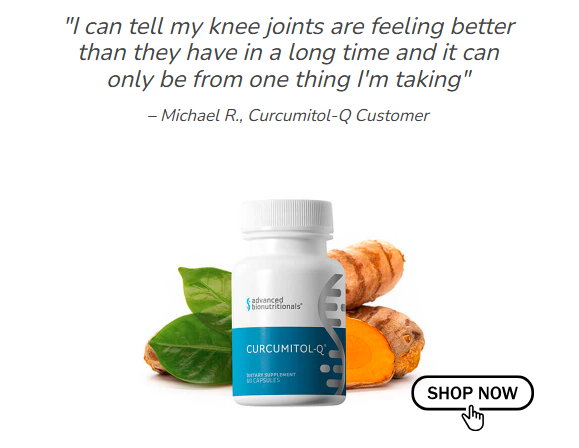
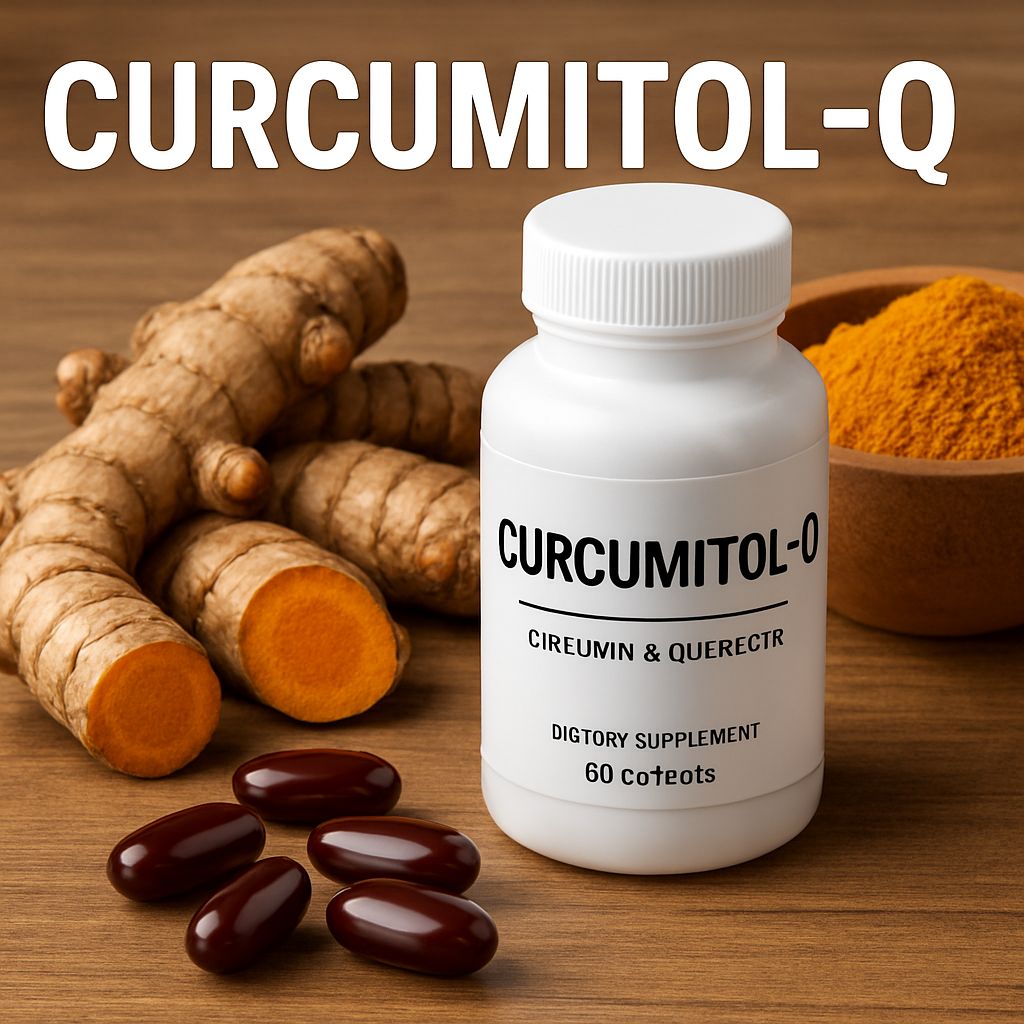
- Curcumitol-Q is the only supplement that combines patented BDMC30 curcumin III with quercetin, and users report feeling its effects in hours, not weeks.
- Research indicates this form of curcumin may be up to 59 times stronger than regular curcumin — keep reading to learn why that number is important.
- Natural anti-inflammatory support doesn’t have to mean waiting months with no results — the right formulation can make a big difference.
If you’ve tried curcumin before and didn’t notice any effects, it’s likely not the curcumin that was the issue — it was the delivery method.
For millennia, turmeric has been a staple in Ayurvedic and traditional Chinese medicine for its ability to soothe inflammation, alleviate joint pain, and promote overall well-being. The magic ingredient that provides most of these benefits is curcumin. However, there’s a catch: the vast majority of curcumin supplements on the market today are poorly absorbed by the human body. This means that most of what you ingest simply passes through your system without providing any benefits. Advanced Bionutritionals aimed to tackle this issue head-on, and the result is a game-changing formulation that’s redefining what a curcumin supplement can actually achieve.
Why Your Regular Curcumin Supplement Isn’t Working
Health food stores are filled with curcumin supplements, many of which boast “95% curcuminoids” on their labels. While this may seem impressive, it’s important to note that this percentage refers to the concentration in the raw extract, not the amount your body is able to absorb and use. This misunderstanding has led many people to waste their money on supplements that fail to deliver the expected results.
Why Most Curcumin Isn’t Absorbed
Curcumin is hydrophobic, so it doesn’t dissolve in water. This means that when you take a curcumin supplement, it largely passes through your digestive system without being absorbed. Studies have consistently shown that curcumin has poor bioavailability when taken orally — it’s metabolized quickly, eliminated from the body rapidly, and doesn’t reach the tissues where inflammation is occurring. One common solution is to combine curcumin with piperine (black pepper extract), which can improve absorption. But this method also has its limitations and doesn’t solve the underlying problem of curcumin delivery.
Why “95% Concentrated” Curcumin Doesn’t Quite Cut It
Typical curcumin extracts contain three main curcuminoids: curcumin I, curcumin II, and curcumin III (also known as bisdemethoxycurcumin, or BDMC). In most commercial extracts, curcumin I is the most prevalent — accounting for roughly 70-80% of the total — while BDMC, the rarest and arguably most potent of the three, is present in minuscule amounts. So, even a “high-potency” 95% curcuminoid product may contain very little of the compound that research now suggests is the most effective at combating inflammation through multiple pathways at once.
Curcumin Type % in Standard Extract Inflammation Pathways Targeted Bioavailability Curcumin I 70–80% NF-κB Low (standard) Curcumin II 15–25% NF-κB Low (standard) Curcumin III (BDMC30) <5% standard / 30%+ in BDMC30 NF-κB + MSK1 Significantly enhanced Source: Advanced Bionutritionals / curcumin pharmacokinetics research
The Science Behind Curcumin’s Anti-Inflammatory Power
To understand why certain curcumin formulations outperform others so dramatically, it helps to look at exactly how curcumin interacts with your body’s inflammatory systems. Inflammation isn’t a single switch — it’s a cascade of molecular signals, and the most effective anti-inflammatory compounds are the ones that can interrupt that cascade at multiple points.
How Curcumin Works with the NF-κB Inflammatory Pathway
NF-κB (nuclear factor kappa-light-chain-enhancer of activated B cells) is often referred to as the main controller of inflammation. When it’s activated, it turns on the genes that produce pro-inflammatory cytokines — these are the chemical messengers that cause chronic inflammation throughout the body. Curcumin is one of the most researched natural compounds for its ability to stop NF-κB activation. All three curcuminoids — curcumins I, II, and III — have this ability, which is why turmeric has been used for so long as an anti-inflammatory agent in traditional medicine and in peer-reviewed research.
Introducing BDMC30: A New and Improved Form of Curcumin
This is where things get really interesting. BDMC, also known as Curcumin III, does everything that the other curcuminoids do — it effectively reduces the activity of NF-κB. But it also targets another inflammatory enzyme called MSK1 (mitogen- and stress-activated kinase 1). MSK1 increases the inflammatory response downstream of NF-κB, so blocking it provides an additional level of relief that Curcumins I and II can’t provide on their own. BDMC30 is a patented, concentrated form of Curcumin III that increases its presence in the formula from the usual <5% found in standard extracts to a much higher concentration — making this dual-pathway blocking action truly achievable at a therapeutic dose.
Quercetin Enhances the Power of Curcumin
Quercetin is a flavonoid that naturally occurs in foods like onions, apples, and green tea. It has been shown to have anti-inflammatory and antioxidant properties. When combined with BDMC30, however, it becomes even more potent. Quercetin increases the bioavailability and activity of curcumin compounds, working in tandem to provide long-lasting anti-inflammatory effects. This powerful combination targets inflammation in two ways: quercetin inhibits the release of histamine and regulates the activity of immune cells, while BDMC30 targets NF-κB and MSK1. The result is a potent one-two punch against chronic inflammation that neither compound could achieve on its own, according to researchers.
Curcumitol-Q Outperforms Regular Curcumin by 59 Times
That’s not just an empty sales pitch — it’s based on comparative bioavailability studies on advanced curcumin delivery systems versus standard curcumin extracts. When your body can actually absorb and use the curcumin you’re taking, the difference in real-world results is significant.
What Sets Curcumitol-Q Apart From Other Supplements
Curcumitol-Q is unique in that it features two key innovations not found together in any other formula on the market. Firstly, it includes the patented BDMC30 curcumin III — a rare, dual-pathway curcuminoid that simultaneously blocks both NF-κB and MSK1. Secondly, it combines that concentrated BDMC30 with quercetin, which results in a synergistic anti-inflammatory effect that is more powerful than what either compound could achieve on its own.
Many other supplements continue to use the same primary curcumin I-dominant extracts that have been available for years. Even top-tier options that utilize BCM-95®, Meriva®, or Theracurmin® — all reputable forms that enhance bioavailability — concentrate on enhancing the absorption of the standard curcuminoid mixture. None of them isolate and concentrate curcumin III in the way BDMC30 does, and none of them pair it with quercetin for that additional level of anti-inflammatory assistance.
In other words, Curcumitol-Q is not on the same level as ordinary curcumin supplements. It fights inflammation in ways that other products just can’t reach.
- BDMC30 curcumin III with a patent — has a higher concentration than what is found in standard extracts
- Inhibition of dual-pathways — provides wider relief by blocking both NF-κB and MSK1
- Combination of Quercetin — enhances and prolongs anti-inflammatory effects
- System for liposomal delivery — ensures that the formula reaches your tissues
- No need for piperine — the delivery technology does the heavy lifting without the need for black pepper additives
The result is a formula that goes beyond just containing curcumin — it’s designed to provide tangible, noticeable results where standard supplements have consistently failed.
The Game-Changer: Liposomal Delivery
Method of Delivery Rate of Absorption Does it Reach Target Tissues? How Long Does it Last? Regular Curcumin Capsule Extremely Low Barely Not Long Curcumin with Piperine Decent Somewhat Decent Liposomal Curcumin (BDMC30) Substantially Higher Yes — penetrates deep into tissues Long-lasting Based on research comparing curcumin pharmacokinetics and liposomal delivery
Liposomes are tiny spheres made of phospholipids — the same material that makes up your cell membranes. When curcumin is enclosed within these spheres, it’s like it’s wearing a biological costume that lets it go through the digestive system mostly unscathed, cross into the bloodstream effectively, and penetrate deeper into tissues where inflammation is actually happening.
This strategy is a total departure from the traditional method of just upping the dose of a compound that isn’t well absorbed. Simply increasing a bad delivery system doesn’t address the root issue. Liposomal encapsulation tackles the issue at its core — it changes the way the compound acts in your body, not just the quantity you’re ingesting.
The real-world benefit of this is that you don’t need as much of the active compound to get the same effect. Studies of liposomal curcumin consistently demonstrate more potent anti-inflammatory and antioxidant results than the same or even higher doses of regular curcumin. This is exactly why the 59x potency comparison is significant.
How It Works In Hours Instead Of Weeks
When you no longer have to worry about absorption, the timeline for results is drastically different. Traditional curcumin supplements often need to be taken consistently for weeks before users see any significant change — if they notice anything at all. With liposomal BDMC30 delivery, the compound gets to inflamed tissues much quicker, and the dual NF-κB and MSK1 blocking action starts to work almost immediately at the cellular level.
Many individuals who have tried Curcumitol-Q have seen a decrease in joint stiffness and discomfort within a few hours of their first dose. This isn’t just a placebo effect — it’s the expected result when a bioavailable, dual-pathway anti-inflammatory is able to reach its target tissues quickly and effectively. For those who have been dealing with chronic inflammation with little to no success, this kind of immediate relief can truly be a game changer.
More Than Just Joint Pain: The Other Inflammation Conditions It Helps
Chronic inflammation is not just a joint problem. It is a systemic problem that appears in virtually every major health condition — from heart disease and digestive disorders to cognitive decline and mood imbalances. Curcumin’s anti-inflammatory mechanisms are broad-spectrum by nature, which is why research on curcumin spans such a wide range of health conditions, including digestive disorders.
Curcumin controls several inflammation signaling pathways, such as NF-κB, MAPK, AP-1, and JAK/STAT. These pathways impact inflammation in tissues all over the body, not just in the joints. This is why a truly bioavailable curcumin formula is so appealing for overall health. For those interested in understanding more about inflammation and its effects, exploring the causes of IBS in women might provide additional insights.
Aside from alleviating joint and muscle pain, there are studies and clinical observations suggesting that curcumin may help with:
- Bowel inflammation — including ulcerative colitis, where curcumin’s ability to inhibit NF-κB has shown notable benefits
- Liver protection — BDMC30 curcumin III has shown to have protective effects against liver damage caused by toxins
- Skin inflammation — users have reported calmer skin, less frequent flare-ups, and reduced post-inflammatory marks
- Stomach discomfort — anti-inflammatory action in the gut lining may help soothe chronic digestive irritation
- Cardiovascular inflammation — a significant contributor to arterial damage and risk of heart disease
Support for Heart Health and Cholesterol
It is now widely recognized that inflammation in the cardiovascular system is a central contributor to heart disease, not just cholesterol levels alone. Curcumin’s ability to suppress inflammatory cytokines and inhibit NF-κB activity in vascular tissue makes it an appealing natural support for cardiovascular health. Research suggests that curcumin may help maintain healthy endothelial function, which is the health of the inner lining of blood vessels and is foundational to long-term heart health.
Using a highly absorbable form such as liposomal BDMC30, these cardiovascular benefits are much more achievable than they would be with a regular supplement that barely makes it into the bloodstream. The ability to support heart health and manage joint inflammation at the same time, using just one well-designed supplement, is one of the lesser-known benefits of Curcumitol-Q.
Mood and Brain-Derived Neurotrophic Factor (BDNF)
Depression has a well-known relationship with systemic inflammation. People who are going through depressive episodes often have higher levels of inflammatory markers. This has led researchers to look at anti-inflammatory compounds as possible tools to support mood. Curcumin is particularly interesting to scientists in this area because it can change the inflammatory pathways that impact brain chemistry.
A particular mechanism involves BDNF — brain-derived neurotrophic factor — a protein that aids in the growth and upkeep of neurons. Depression, cognitive decline, and memory issues are all linked to low BDNF levels. Curcumin may aid in maintaining healthy BDNF levels, according to research, providing a neurological aspect to its anti-inflammatory advantages that extends beyond physical discomfort.
A bioavailable curcumin supplement that protects the brain is not only beneficial for people who are suffering from joint pain or digestive problems, but also for those who want to naturally maintain their cognitive abilities and emotional stability over the long term.
How Real Users Describe Their Experiences with Curcumitol-Q
One common thread in user experiences with Curcumitol-Q is astonishment — specifically, astonishment at how rapidly it takes effect compared to other curcumin products they’ve tried. People who had given up on curcumin after lackluster results with standard supplements report experiencing tangible differences in joint comfort and mobility within hours of their first dose. Those suffering from stomach discomfort and digestive inflammation report a soothing effect that builds over the first few days of consistent use. And users dealing with the kind of low-grade, systemic inflammation that makes everyday life feel more difficult than it should describe a slow but significant improvement in energy, comfort, and overall sense of wellbeing — the kind of shift that’s hard to attribute to anything other than finally having an anti-inflammatory that actually reaches its target.
Integrating Curcumitol-Q into Your Everyday Life
Integrating Curcumitol-Q into your daily routine is simple, but the timing and consistency of your intake can significantly impact how quickly and noticeably it works. It’s recommended to take it with a meal that includes some healthy fat — such as avocado, olive oil, eggs, or nuts — because curcumin is fat-soluble and absorbs even better when combined with dietary fats, even within a liposomal delivery system. Most people find that taking it in the morning with breakfast provides the best opportunity to observe the anti-inflammatory effects building up throughout the day.
Curcumitol-Q: The Curcumin Supplement Worth Trying
- Targets two inflammatory pathways — NF-κB and MSK1 — that standard curcumin supplements can’t reach
- Liposomal delivery ensures the active compounds reach your tissues instead of being wasted
- Quercetin combination prolongs the anti-inflammatory window and provides additional immune-modulating support
- Fast-acting results — users report feeling a difference in hours, not weeks
- Broad-spectrum benefits cover joint health, cardiovascular support, digestive comfort, mood, and cognitive function
- No piperine required — the delivery technology takes care of absorption without the digestive sensitivity some people experience with black pepper extract
The curcumin supplement market is full of products that sound impressive on paper but fail to deliver in reality. The difference between a standard 95% curcuminoid capsule and a liposomal BDMC30 formula paired with quercetin isn’t a minor upgrade — it’s a completely different product category. One is a compound your body can barely use. The other is a precision-engineered delivery system designed to work with your biology.
Curcumitol-Q is a game-changer for anyone suffering from chronic joint pain, persistent muscle stiffness, digestive inflammation, skin flare-ups, or the type of systemic low-grade inflammation that quietly erodes quality of life. Instead of merely throwing a poorly absorbed compound at the problem and hoping for the best, Curcumitol-Q targets the root cause of the problem. The science behind BDMC30, liposomal encapsulation, and quercetin synergy is not theoretical. It’s documented, it’s precise, and it explains exactly why this formula delivers results that most curcumin supplements can’t match.
Don’t blame curcumin if you’ve tried it before and it didn’t work. The problem was the formula. Curcumitol-Q is the curcumin supplement you’ve been waiting for.
Commonly Asked Questions
Despite being one of the most studied natural compounds in the world of nutritional science, people still have a lot of questions about curcumin. This is mostly due to a market that’s flooded with products that don’t clearly explain their science. Here are some of the most important answers.
When you’re choosing a curcumin supplement, it’s important to understand the differences between types of curcumin, delivery systems, and combination formulas. Even a basic understanding of how these differences affect your body can help you make a more informed decision about which supplement is worth your time and money.
Here are the most frequently asked questions, answered honestly and without the sales pitch.
Question Short Answer What makes Curcumitol-Q different? BDMC30 + quercetin + liposomal delivery — a combination found nowhere else How fast does it work? Many users report noticeable relief within hours of the first dose Does it help beyond joints? Yes — heart, gut, brain, skin, and mood all benefit from reduced systemic inflammation Is it safe with medications? Generally well-tolerated; consult your doctor if on blood thinners or immunosuppressants Why liposomal delivery? It solves curcumin’s absorption problem at the source, not just on paper
What Makes Curcumitol-Q Different From Regular Turmeric Supplements?
Curcumitol-Q is different from regular turmeric supplements in three specific ways that compound on each other. Standard turmeric supplements — even high-potency ones — are built around curcumin I, which targets only the NF-κB inflammatory pathway and absorbs poorly in most delivery formats. Curcumitol-Q centers on BDMC30, a patented, concentrated form of curcumin III that hits both NF-κB and MSK1 simultaneously. That second target — MSK1 — is the key differentiator that no standard turmeric supplement addresses.
Additionally, Curcumitol-Q marries BDMC30 with quercetin to provide a comprehensive anti-inflammatory package. It also incorporates a liposomal delivery system that guarantees the compounds arrive at the tissues where they are needed. This specific three-part combination is not currently available in any other formula on the market. This isn’t a marketing gimmick, it’s a fact. Curcumitol-Q was created specifically to fill this void in the supplement market.
How Fast Does Curcumitol-Q Work?
Most people notice a significant decrease in joint stiffness and pain within the first few hours of taking Curcumitol-Q. This is incredibly fast compared to typical curcumin supplements. The fast-acting nature of Curcumitol-Q is due to its liposomal delivery system. Once absorption isn’t an issue anymore, the active ingredients get to the inflamed tissues quickly. This allows the dual-pathway blocking action to start almost instantly on a cellular level.
However, it’s worth noting that results can differ from person to person, based on the degree of inflammation, general health, and regularity of use. Many people find that the benefits increase and become more consistent after the first week or two of daily use. The initial response, which lasts a few hours, is genuine, but the full advantage of Curcumitol-Q is achieved with regular use as systemic inflammation levels gradually decrease over time. For those interested in monitoring their progress, understanding blood test biomarkers can be a valuable tool in assessing inflammation levels.
Does Curcumitol-Q Help With More Than Just Joint Pain?
Definitely — and this is one of the most overlooked benefits of a truly bioavailable curcumin supplement. Since Curcumitol-Q tackles inflammation at the molecular signaling level — by suppressing NF-κB, MSK1, and complementary pathways via quercetin — it can help with any condition where systemic inflammation is a factor.
Studies have shown that curcumin’s wide-ranging anti-inflammatory mechanisms have yielded encouraging results in areas such as cardiovascular health, inflammatory bowel conditions, skin inflammation, liver protection, and neurological support, including mood and BDNF levels. BDMC30 curcumin III, in particular, has demonstrated protective effects against liver damage induced by toxins — a benefit that is relevant to anyone who uses conventional medications that put a strain on liver function.
The main difference is that to achieve these wider benefits, a curcumin supplement needs to be well-absorbed and reach the bloodstream and target tissues at therapeutic levels. A supplement that is poorly absorbed won’t provide these benefits. The liposomal delivery of Curcumitol-Q makes these systemic benefits achievable in a way that standard curcumin extracts just can’t.
Can I Take Curcumitol-Q With Other Medications or Supplements?
Curcumin is generally safe to take and has a great safety record across a wide range of doses. However, because curcumin has mild blood-thinning properties and can influence how certain enzymes process medications, it’s a good idea to talk to your doctor if you’re taking anticoagulants like warfarin, immunosuppressants, or any medication where dosage precision is important. For most people, Curcumitol-Q can be taken with standard supplements — including fish oil, magnesium, and vitamin D — without any problems. Its quercetin component also has a good safety record and is generally well-tolerated even at higher doses in most people.
Why Does Liposomal Delivery Boost Curcumin Absorption?
Liposomal delivery enhances the absorption of curcumin by addressing the core biological issue that renders conventional curcumin so inefficient — its incapacity to endure the digestive process and cross into the bloodstream in a usable form. Liposomes are nanoscale spheres composed of phospholipids, the same fatty molecules that constitute your cell membranes. When curcumin is enveloped within these spheres, it’s protected from the severe digestive conditions of the gut and from premature metabolic breakdown in the liver.
Liposomes are structurally similar to cell membranes, so they are absorbed by intestinal cells much more efficiently than free curcumin molecules. This means that a much larger proportion of the active compound can enter circulation intact and ultimately reach the inflamed tissues where it is needed. The difference in tissue penetration between liposomal curcumin and standard curcumin is not small — it’s the difference between a compound that reaches its target and one that mostly doesn’t.
The 59-times-stronger comparison is there for a reason — and it’s not because of a higher curcumin dose. It’s because of a delivery system that changes how much of the curcumin your body can actually use. When you get rid of the absorption obstacle, the therapeutic potential of curcumin III that has been shown in cell and animal studies finally becomes available in a practical human context.