








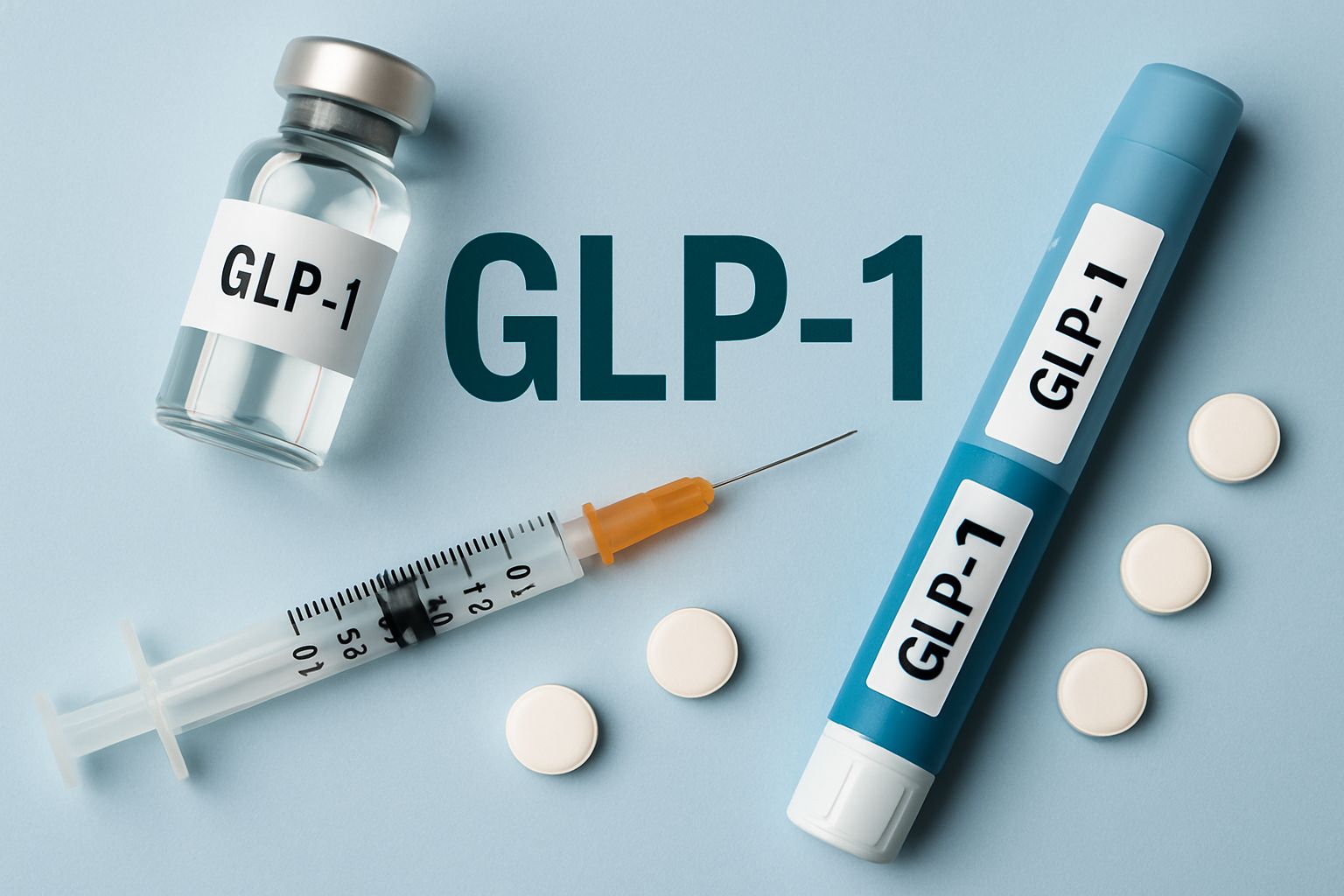
A Quick Look at GLP-1 Supplements
- GLP-1 supplements are not the same as prescription GLP-1 medications like Ozempic or Wegovy — they do not contain any actual GLP-1 hormone and are not approved by the FDA.
- Some natural ingredients in these supplements, such as berberine and fiber blends, may slightly support GLP-1 activity, but the evidence is not strong and the results vary greatly.
- For individuals with diabetes, combining unregulated GLP-1 supplements with prescription medications can lead to serious health risks, including dangerous fluctuations in blood sugar.
- The FDA does not require dietary supplement manufacturers to prove the safety or effectiveness of their products before they sell them — this is a key difference from prescription drugs.
- There are natural lifestyle strategies that may genuinely support GLP-1 levels — keep reading to find out what the science actually supports.
The GLP-1 supplement market is booming, but most people do not realize that they are not getting anything close to what is in a prescription GLP-1 drug. Understanding this difference could protect your health — and your wallet. Empowering individuals with diabetes with accurate, evidence-based information is exactly why it is so important to break down what these supplements actually do (and do not do).
GLP-1 Supplements and GLP-1 Medications Are Not the Same Thing
Before you spend any money on a GLP-1 supplement, it’s important to understand that these products are not the same as GLP-1 medications. The name is more about marketing than medicine. As Dr. Donna Ryan, an obesity medicine specialist at Pennington Biomedical Research Center, explains, there is no GLP-1 in any of these supplement products. None at all.
Understanding the Function of GLP-1 in Your Body
GLP-1 (Glucagon-Like Peptide-1) is a hormone that your body naturally produces in your gut after you eat. It is responsible for triggering the release of insulin, suppressing glucagon (the hormone that raises blood sugar), slowing the emptying of the stomach, and sending signals to your brain to reduce your appetite. In individuals with type 2 diabetes, this system is often dysfunctional — which is exactly why GLP-1 receptor agonist medications were created to fill in.
Prescription GLP-1 drugs like semaglutide (Ozempic, Wegovy) and liraglutide (Victoza) function by directly binding to GLP-1 receptors throughout the body. This binding action results in measurable, clinically validated effects on blood sugar, appetite, and body weight. The mechanism is accurate, potent, and has been well-documented through years of rigorous clinical trials.
GLP-1 supplements, however, don’t actually contain the GLP-1 hormone. They’re composed of a variety of natural ingredients that are purported by the manufacturers to either support or stimulate the body’s own production of GLP-1. This is a very different approach, and it’s also much less potent. For more information on the effectiveness of these supplements, you can explore whether GLP-1 supplements work.
Prescribed GLP-1 Medications vs. Over-the-Counter Supplements
There is a world of difference between these two categories. Prescribed GLP-1 medications undergo several phases of clinical trials involving thousands of patients before they even hit the pharmacy shelves. On the other hand, supplements like Lemme GLP-1 Daily, Supergut’s Gut Healthy GLP-1 Booster, Codeage GLP-Advantage+, and Joi’s GLP-1 Assist do not need to go through any of these tests. They can be marketed and sold without any clinical evidence to support their claims.
Why the FDA has Different Approaches
GLP-1 medications that have been approved by the FDA have gone through a rigorous multi-phase clinical trial process to prove both their safety and efficacy. This process is non-negotiable for prescription drugs as it identifies potential risks and confirms real therapeutic benefits. On the other hand, dietary supplements are under a different regulatory framework. Manufacturers of dietary supplements are not required to prove that their products are effective or safe before they are put on the market.
That’s why experts like Tambini are warning that “the ingredients in these supplements often don’t have the necessary potency and mechanisms to mimic the effects of prescription GLP-1 medications — without proper testing, their safety and effectiveness are very much in doubt.” The burden of proof simply doesn’t exist in the supplement world in the same way it does for pharmaceuticals.
What GLP-1 Supplements Promise to Do
There isn’t much regulation in the supplement industry, and GLP-1 supplements are no exception. They’re everywhere, and they promise a lot. Let’s take a closer look at what they’re actually saying — and what the science says.
Claims of Appetite Suppression and Hunger Control
Many GLP-1 supplements heavily promote themselves around the reduction of hunger. The reasoning seems plausible at first glance: if certain components can coax the body into producing a bit more GLP-1, appetite could be reduced. Some fiber-based components, such as those found in Supergut’s “hunger-quieting” fiber blend, do have studies indicating they can slow digestion and induce a sense of fullness. However, the effect size is, at best, modest and nowhere near what prescription drugs provide.
What’s crucial to note is the matter of strength. Even if a component shows potential in a lab or a minor study, it’s a whole different ball game to turn that into a significant hunger-reducing effect in a real human being — particularly at the dosages usually found in supplements.
Claims about Blood Sugar Regulation
Some GLP-1 supplements, like Codeage’s GLP-Advantage+ and Joi’s GLP-1 Assist, contain ingredients that are said to help regulate blood sugar. Berberine, for instance, is found in many of these formulas and has some evidence of aiding in blood sugar control. However, it’s important to point out that none of the studies referenced for ingredients in GLP-1 supplements involved participants with diabetes — which means the most pertinent group has essentially not been studied in this regard.
For those dealing with type 2 diabetes, this lack of research isn’t just a minor annoyance — it’s a real safety issue. Making choices about blood sugar control based on studies that didn’t include diabetic patients is a big and often overlooked danger. For more insights, consider exploring the blood test biomarkers guide to better understand key health indicators.
What the Ingredient Research Really Says
Let’s examine the usual ingredients found in most GLP-1 supplements and what the research truly backs up:
- Berberine: There is some evidence that this supplement can help regulate blood sugar levels, but the research conducted on diabetic patients is inconsistent and limited.
- Dietary fiber blends: These may slow down the process of gastric emptying and stimulate GLP-1 slightly. However, the effects are not as strong as those of prescription medications.
- Chromium: This is found in products like Codeage GLP-Advantage+ and is claimed to support blood sugar regulation. However, the evidence is not strong and varies from study to study.
- Bitter melon extract: This is sometimes included in supplements for blood sugar regulation. However, there is limited data from human trials, and the dosages vary greatly between products.
- Probiotics and prebiotics: These are ingredients that support gut health and may indirectly support GLP-1 pathways. However, the research is in its early stages and is not conclusive.
The common theme here is that these ingredients may have a minor effect or show potential in controlled environments, but when they are included in supplements, the doses are smaller and the marketing language suggests that they are more effective than the evidence suggests. For someone who is healthy and does not have any metabolic conditions, the risk may be low. However, for someone with diabetes or who is taking prescription medications, the situation is more complex.
The Actual Dangers You Should Be Aware Of
There’s not much in the way of proven benefits when it comes to GLP-1 supplements. The drawbacks, however, are very real and should be given serious consideration — especially if you have diabetes or are currently on prescription medication.
Lack of FDA Approval Equals Lack of Safety Assurance
Without FDA approval, a supplement on the market has not been independently verified for its contents, effectiveness, or safety for individual use. Essentially, the manufacturer is operating on a trust system. However, in an industry driven by trends and profit, this system has significant flaws.
It’s not that every GLP-1 supplement is harmful, but there’s no surefire way to tell which ones are safe and which ones aren’t unless you do a lot of independent research. Unfortunately, most people don’t have the resources or knowledge to do this effectively.
While independent testing bodies such as NSF International and USP (United States Pharmacopeia) do provide optional certification for supplements, most GLP-1 supplements currently available have not pursued or received these certifications. This lack of certification should be a cause for concern for any health-conscious individual.
What it really means when the FDA isn’t watching:
Rewrite the following human content into AI content:- No obligation to prove effectiveness before a product is sold in stores or online.
- No required safety testing in particular populations, such as people with diabetes, kidney disease, or cardiovascular conditions.
- No standardized manufacturing requirements to ensure that the label accurately represents what is in the bottle.
- No pre-market review — issues are only addressed after complaints or adverse events are reported.
- No obligation to disclose interactions with prescription medications, including actual GLP-1 drugs like semaglutide.
Risk of Dangerous Blood Sugar Drops for People With Diabetes
This is where the risk becomes very real. For someone managing type 2 diabetes — particularly those already on insulin, metformin, or a prescription GLP-1 medication — adding an unregulated supplement that claims to affect blood sugar or GLP-1 activity introduces unpredictable factors into a carefully managed system. Experts specifically warn that combining these unregulated supplements with prescription GLP-1 drugs could lead to potentially dangerous outcomes, including hypoglycemia — a drop in blood sugar that, in severe cases, can be fatal.
Unlisted Ingredients and Unreliable Dosages
One of the risks of GLP-1 supplements is that you don’t know what’s really in them. The label might say one thing, but without any required third-party testing, the actual amount of active ingredients can be wildly different from one batch to the next — or even from what’s printed on the label. This makes it very hard to know how your body will react, and it’s hard to get into a safe, consistent routine.
Various products employ the use of private mixes, enabling companies to list components without revealing their precise quantities. This method makes it incredibly challenging for healthcare professionals to determine if a supplement is safe for a particular patient, and it essentially bars any significant comparison between products.
Real-World Example: A person with type 2 diabetes takes a GLP-1 supplement containing berberine and chromium alongside their prescribed metformin. Because the supplement’s actual berberine concentration is higher than labeled — and berberine has demonstrated blood-sugar-lowering activity — their glucose drops unexpectedly. Without knowing the true ingredient concentration, neither the patient nor their doctor can easily identify the cause. This is not a hypothetical scenario; it reflects exactly the kind of interaction that makes unregulated supplements particularly risky in medically managed populations.
Chromium, bitter melon, and berberine — all commonly found in GLP-1 supplements — each carry independent blood-sugar-lowering properties. When combined in a single formula and stacked on top of prescription diabetes medications, the additive effect becomes difficult to predict and harder to manage.
Aside from influencing blood sugar levels, some supplement mixes incorporate stimulants, herbal extracts, or substances that interact with typical medications used by people with metabolic conditions. Without complete transparency regarding ingredients and dosages, patients and providers are essentially operating in the dark.
The Danger of Postponing Effective Medical Care
The most overlooked risk of GLP-1 supplements is the lost time — the time wasted on an untested supplement instead of seeking a treatment that has been proven to work. For someone living with type 2 diabetes or serious health risks related to obesity, postponing effective treatment isn’t just annoying. It can have serious implications for their long-term health.
GLP-1 drugs that are prescribed by a doctor have shown real, measurable health benefits for the people they’re meant to help. If you spend months taking a supplement that doesn’t really do anything, that’s months of your disease getting worse, your insulin resistance increasing, or you missing out on the heart protection that these drugs can give.
There’s a mental aspect too. When a supplement doesn’t work — which, based on the data, is the probable result for most people — it can lead to disappointment, decreased faith in getting help, or a misguided notion that “nothing works” for their condition. That type of despair can be a major obstacle to eventually seeking successful treatment.
Let’s not forget the impact on your wallet. GLP-1 supplements are not budget-friendly, typically costing anywhere from $40 to over $100 every month. That ongoing expense, for a product that has not been definitively proven to work, could be better spent on a visit to the doctor, a consultation with a nutritionist, or on insurance that covers prescription treatments.
- Delays in treatment can allow metabolic conditions like type 2 diabetes to worsen unchecked during the trial period.
- Overconfidence in a supplement’s effects may lead people to reduce or skip prescribed medications without medical guidance.
- Financial burden from monthly supplement costs can reduce resources available for legitimate medical care.
- Psychological disappointment from supplement failure may discourage people from seeking proven treatments.
How Prescription GLP-1 Medications Are Proven to Work
Understanding why prescription GLP-1 medications are so different from supplements starts with understanding the drug development process that stands behind them. These are not products that were rushed to market on the back of a promising trend. They represent decades of research, multiple phases of clinical testing, and ongoing post-market surveillance. For those considering alternatives, it’s important to explore stimulant-free fat burner supplements as a potential option.
GLP-1 receptor agonists operate by directly imitating the body’s natural GLP-1 hormone. They bind to GLP-1 receptors, prompting the release of insulin in response to food, suppressing glucagon, slowing gastric emptying, and reducing appetite. The binding is specific, potent, and has been validated pharmacologically. This is fundamentally different from taking a supplement that might encourage the body to produce a little more GLP-1 on its own.
What It Takes for a Drug to Get FDA Approval
Before a GLP-1 drug can be approved by the FDA, it has to go through several stages of clinical trials. Phase I trials are small and test for safety. Phase II trials are larger and test for dosing and effectiveness. Phase III trials are the largest and involve thousands of participants from a range of backgrounds, including those with diabetes, heart disease, and obesity. These trials must show that the drug is effective and safe. Only after the FDA reviews and approves all this data can the drug be prescribed. This is a rigorous process that supplements don’t go through, which is why there’s a difference between evidence-based medicine and marketing based on hope.
Typical Side Effects of Prescribed GLP-1 Medications
GLP-1 drugs are generally safe when prescribed and overseen by a healthcare provider, but they do have recognized and documented side effects. The most common ones are gastrointestinal — nausea, vomiting, diarrhea, and constipation — especially during the initial dose escalation period. These effects usually decrease over time as the body gets used to the medication.
There are some more serious, but less common, side effects like pancreatitis, gallbladder disease, and in rodent studies, though not confirmed in humans, thyroid C-cell tumors with certain agents. These risks are disclosed, monitored, and factored into prescribing decisions by qualified healthcare providers. This level of known-risk transparency simply does not exist for GLP-1 dietary supplements, where adverse effects may go unreported, untracked, and unacknowledged entirely.
Who Can Get a Prescription for GLP-1 Medications
GLP-1 medications that require a prescription are not suitable for everyone and they are certainly not a quick fix for weight loss. These are medications that are approved to treat certain health conditions, and to qualify for them, a healthcare provider will need to conduct a thorough assessment. This will include reviewing your complete health history, such as any current or past health conditions, your family history, any previous attempts to lose weight, and any medications you are currently taking.
Typically, the general eligibility criteria for prescription GLP-1 medications include:
- Diagnosed with type 2 diabetes and not experiencing sufficient blood sugar control with current medications
- A BMI of 30 or more (classified as obesity) for weight management indications
- A BMI of 27 or more with at least one weight-related comorbidity such as hypertension, high cholesterol, or sleep apnea
- No personal or family history of medullary thyroid carcinoma or Multiple Endocrine Neoplasia syndrome type 2 (MEN2)
- No history of pancreatitis or other contraindicated conditions as determined by your provider
Your doctor will also evaluate whether your current medications interact with GLP-1 drugs — especially if you’re already on insulin or other glucose-lowering agents, as dose adjustments are often necessary to prevent hypoglycemia. This level of personalized, medically supervised evaluation is what distinguishes prescription GLP-1 use from the unguided, one-size-fits-all approach of supplement use.
It’s important to note that GLP-1 drugs are most effective when they’re part of a comprehensive lifestyle regimen. The clinical studies that showed these drugs work also included training on diet and exercise. As doctors often point out, the best results are seen when changes in lifestyle are part of the strategy — not an afterthought. A pill or shot by itself, whether it’s a prescription or a supplement, is never the whole solution.
Is It Worth It to Use GLP-1 Supplements?
For the majority of people, particularly those with diabetes or on prescription medication, there isn’t enough evidence to justify spending money on GLP-1 supplements as a replacement for medical treatment. The ingredients in these supplements may provide minor, indirect support for metabolic health, but they also have real risks, such as inconsistent dosage, undisclosed interactions, and the significant cost of delaying effective treatment. If you’re interested in natural ways to boost your body’s GLP-1 activity, the lifestyle strategies discussed in the FAQ below are a much better place to start. And if you really need help managing your blood sugar or losing weight, the best thing you can do is have an open discussion with a qualified healthcare provider about whether prescription GLP-1 therapy is right for you.
Common Questions
GLP-1 supplements are often the subject of many questions, especially considering how they are often marketed alongside prescription medications that have been clinically proven. Here are the answers to the most frequently asked questions.
One of the most significant confusions in today’s health and wellness sphere is the difference between GLP-1 supplements and GLP-1 medications. The similarity in names is not a coincidence—it creates an illusion that suggests these supplements offer something akin to what prescription medications do. But they don’t. Here’s the real deal on stimulant-free fat burner supplements.
| Feature | Prescription GLP-1 Medications | GLP-1 Dietary Supplements |
|---|---|---|
| Contains GLP-1 hormone | ✓ Acts on GLP-1 receptors directly | ✗ No GLP-1 present |
| FDA Approved | ✓ Yes, with clinical trial data | ✗ No approval required |
| Clinically proven efficacy | ✓ Extensive trials in diabetic populations | ✗ Little to no clinical evidence |
| Safety monitoring | ✓ Ongoing post-market surveillance | ✗ Self-reported adverse events only |
| Requires prescription | ✓ Healthcare provider required | ✗ Available over the counter |
| Standardized dosing | ✓ Precise pharmaceutical-grade doses | ✗ Often inconsistent batch to batch |
The table above makes the contrast unmistakable. These are not two versions of the same thing at different price points — they are fundamentally different categories of product with entirely different levels of evidence, oversight, and risk profiles.
Can GLP-1 Supplements Substitute Ozempic or Wegovy?
No — GLP-1 supplements are not an alternative to Ozempic (semaglutide) or Wegovy. Ozempic and Wegovy are FDA-approved prescription drugs that activate GLP-1 receptors in the body with pharmaceutical-grade accuracy. They have been proven in large-scale clinical trials with thousands of participants, including people with type 2 diabetes and obesity-related comorbidities. GLP-1 supplements do not contain any GLP-1 hormone and have not been tested in the same populations under the same circumstances.
Be wary of any GLP-1 supplement that’s being promoted as a “natural replacement” for Ozempic or Wegovy. The way they work, the proof supporting them, and the possible health effects are all different. If you think you might be a candidate for prescribed GLP-1 treatment, your next move should be to talk to your doctor, not to buy a supplement.
Is it Safe for Diabetics to Take GLP-1 Supplements?
Here’s where you need to be careful. For diabetics — especially those already taking insulin, metformin, or a GLP-1 medication that’s been prescribed — unregulated GLP-1 supplements can cause unpredictable changes in blood sugar in a system that’s already being carefully managed. Ingredients like berberine, chromium, and bitter melon extract can all lower glucose levels on their own. When these are added to the diabetes medications that are already being taken, the combined effects can cause hypoglycemia, which can be dangerous in severe cases.
Healthcare professionals routinely warn that mixing over-the-counter dietary supplements with prescribed GLP-1 medications can result in potentially hazardous situations. Apart from blood sugar impacts, the absence of standardized production implies that the actual dosage of active components can differ greatly from what’s stated on the label — making it almost impossible for even a knowledgeable healthcare provider to anticipate how a particular supplement will interact with a patient’s medication routine. If you have diabetes, don’t start any GLP-1 supplement without specific advice from your healthcare provider.
What Are the Most Common Ingredients in GLP-1 Supplements?
GLP-1 supplements usually contain a variety of natural ingredients that are believed to either support the body’s own GLP-1 production or mimic some of its metabolic effects. These often include berberine, chromium, bitter melon extract, blends of dietary fiber (including prebiotic fibers), and various strains of probiotics. Some also contain cinnamon extract, alpha-lipoic acid, and magnesium, which are generally associated with metabolism but have limited evidence of GLP-1-specific effects.
Studies on these ingredients have shown some theoretical support for small metabolic benefits in healthy populations. However, it’s important to point out that none of the studies supporting these ingredients were conducted specifically in people with diabetes — meaning the most relevant patient group has essentially not been studied in this context. The bottom line: these ingredients are not completely without merit, but their effects are small, inconsistent, and cannot match what prescription GLP-1 therapy provides.
Is It Safe To Combine GLP-1 Supplements With Prescription GLP-1 Drugs?
It’s not a good idea unless you have your doctor’s approval. If you take a GLP-1 supplement and a prescription GLP-1 drug like semaglutide or liraglutide at the same time, you’re essentially doubling up on similar metabolic effects — and there’s no telling what the combined effect might be. If you’re already experiencing the appetite suppression and gastric slowing effects of a prescription GLP-1 drug, adding supplement ingredients with similar claimed mechanisms could make side effects worse or lead to dangerous swings in blood sugar.
The risk is increased by the issue of ingredient transparency. Many GLP-1 supplements use proprietary blends that do not reveal the precise amounts of each ingredient, making it impossible for the patient or their prescribing physician to accurately assess the risk of interaction. This is not a case where “more is better.” It’s a case where unpredictability can lead to real harm. For more details, you can refer to GLP-1 supplements and their effectiveness.
For those who are already taking a GLP-1 prescription medication and are thinking about adding a supplement for whatever reason, make sure to show the product label to your doctor or pharmacist before you start taking it. This is not just for supplements that are branded as GLP-1, but for any supplement that contains berberine, chromium, bitter melon, or other compounds that are commonly found in these types of supplements and are known to affect blood sugar levels.
Can GLP-1 Levels Be Naturally Enhanced?
Indeed, they can — and the good news is that there is solid scientific evidence to back this up. A number of lifestyle factors can help to naturally boost the body’s GLP-1 levels, without the potential risks that come with unregulated supplements. Consuming a diet that is high in soluble fiber from whole foods — such as oats, legumes, and vegetables — can help to naturally boost GLP-1 levels by slowing down digestion and nourishing the gut bacteria that help to regulate hormone levels. Eating meals that are rich in protein has also been shown to stimulate the release of GLP-1 more effectively than meals that are high in carbohydrates alone.
Another well-documented approach is regular exercise. Physical activity has been linked to better GLP-1 response and increased insulin sensitivity, both of which are key objectives of GLP-1 therapy. Focusing on gut health with foods rich in probiotics, such as yogurt, kefir, and fermented vegetables, may also aid the gut microbiome pathways that affect GLP-1 production, although research in this area is ongoing.
When it comes to natural GLP-1 support, the best approach is a high-fiber, protein-heavy diet, regular exercise, and eating habits that support gut health. All of these strategies have substantial supporting evidence and carry no risk of dangerous drug interactions. While these methods will not match the strength of prescription GLP-1 medications for those who truly need them, they are wise, safe first steps for anyone who wants to support their metabolic health. If you need help creating a lifestyle that is friendly to diabetes and supports your body’s natural hormone function, connecting with a specialized resource that empowers diabetes patients is a great place to start. For more information on GLP-1 treatments, check out this guide to GLP-1 weight loss.